23.05.2026

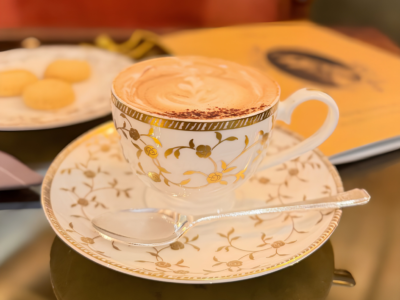
A warm cup, the smell of steaming infusion, the sound of teaspoon clinking on porcelain – these are the little things that bring order to the day. We start with coffee and finish with tea. Both gestures bring more than just taste and aroma. These are the rituals that, when repeated day in day out, create the framework of our everyday life. They teach mindfulness, help us find our rhythm and sometimes simply allow us to be with another person.
In times when the world is moving faster than ever, ritual becomes our anchor. It may take the form of meditation, a morning walk, or preparing of a cup of a beverage which has been accompanying people for centuries during work, conversation and silence. Studies show that a special role in this process is played by coffee and tea: two beverages with different histories and cultures.
Coffee – a portrait of daily ritual
According to the studies of the Coffee and Tea Market Research Institute from Ustroń, headed by Dr Sylwia Mokrysz, Proxy at Mokate S.A., in Poland a cup of coffee is not only a source of caffeine, but also a reflection of people’s lifestyles. The study Consumer Behaviour as a Criterion for Segmentation of the Coffee Market in Poland, prepared by Professor Łukasz Wróblewski and Dr Sylwia Mokrysz, points to as many as five “faces” of Polish coffee drinkers.
The most numerous group is comprised of “Social Gourmets,” women aged 25–54 for whom coffee is a way to meet, talk, and celebrate the moment. They drink it at home, at work, in coffee shops. In turn, “The Practical” treat it rather in terms of its function: as a beverage that gets them up on their feet and helps them to deal with everyday duties. “The Ordinary” drink “whatever is at hand,” whereas “The Pleasure Hunters” are active and conscious consumers that treat coffee as a moment of pleasure, a time for themselves and an element of everyday self-care. The youngest “Energy Accumulators” use it as a natural energy drink to speed up the rhythm of the day.
As noted by the researchers, coffee today is something more than a beverage: it is a micro-world of our habits and emotions. “For me a morning coffee is like a switch-on button for the day – it’s hard to get started without it,” said one of the study participants. This simple sentence contains the truth about the modern ritual: we need small signs that help us to find meaning in repetition, take a break from the hustle and bustle and savour the moment.
Coffee is a unique socially binding agent. As Professor Henryk Mruk wrote in his study Coffee and tea at the service of the consumers’ quality of life, drinking coffee or tea together not only gives pleasure, but is also a way of building relationships. The author notes that “people’s brains are sociable, and conversations over coffee are conducive to the production of serotonin, the hormone of happiness.” This is a scientific confirmation of what we intuitively feel: a cup of coffee brings people together. In the coffee shop, at work or at home, it creates a space for contact, conversation, and the exchange of warmth.
Tea – mindfulness in a cup
Despite being more delicate, tea has a similar power. In one of her texts, Dr Sylwia Mokrysz, who has been studying the tea culture for years, recalls the old traditions of the Chinese ceremony of dian cha, “tea whisking.” Practiced in the Song Dynasty era, this art involved the rhythmic whisking of tea powder with hot water until delicate foam looking like a flower in bloom was obtained.
“When I first tried to whisk tea in the Song Dynasty style, I was surprised how much this experience reminded me of meditation. The movements are repetitive but, at the same time, they require concentration and smoothness. One’s thoughts become calm almost instantly,” recalls Dr Mokrysz. She adds: “In a world where everything is speeding up, such a ritual helps one to slow down. It is a moment to focus on taste, aroma and harmony. Whisking tea is a lesson in mindfulness, an art of stopping.”
This description perfectly fits the spirit of modern mindfulness practices and the slow life philosophy. Tea becomes not only a beverage, but also an exercise in being present and a way to reconnect with oneself. It is no accident that many modern tea ceremonies are nowadays called mindful tea experience.
Rituals that create bonds
From the psychological point of view, such rituals as morning coffee or afternoon tea perform several functions. They manage time, give one the feeling of predictability and build a bridge between the chaos of the day and the need for peace. However, as Professor Mruk emphasises, their importance goes beyond individual experience. It is also a social space where the bonds are born. Coffee shops, tea shops and tables at home are the places where we meet, talk and share our emotions.
Although seemingly unremarkable, these meetings have a neurobiological dimension. When we drink coffee or tea with others, the level of serotonin in our brain rises, together with the sense of happiness and belonging. That is why “coffee and tea are a platform for what is the essence of humanity – building relationships,” as Mruk writes.
It is a paradox that the busy contemporary life needs those moments even more urgently. The rituals that used to seem ordinary are now regaining their importance and becoming a tool for caring for oneself and others.
The taste of everyday life
When we reach for a cup of coffee or tea, it is worth noting something more than an automatic gesture. It is a moment when we can consciously participate in life: experience the aroma, warmth, sound and taste. In that moment we are truly present.
As it was simply put by Sylwia Mokrysz: “All faces of tea, from the daily cup to refined ceremonies, teach us one thing: that drinking tea is something more than quenching thirst. It is a way to stay in touch with culture, nature and oneself.”
In their diversity, coffee and tea combine the world of science and emotions, tradition and modernity. They remind us that the true quality of life does not always require great changes. Sometimes it is enough to have a quiet sip of a beverage, feel the warmth of a cup in one’s hands, and a moment of mindfulness to turn an ordinary moment into a meaningful one.